
Introduction
Pay-Per-Click (PPC) advertising is one of the fastest and most measurable ways to grow your business online. Whether your goal is lead generation, brand awareness, website traffic, or direct sales, the right PPC platform can help you reach the right audience at the right time.
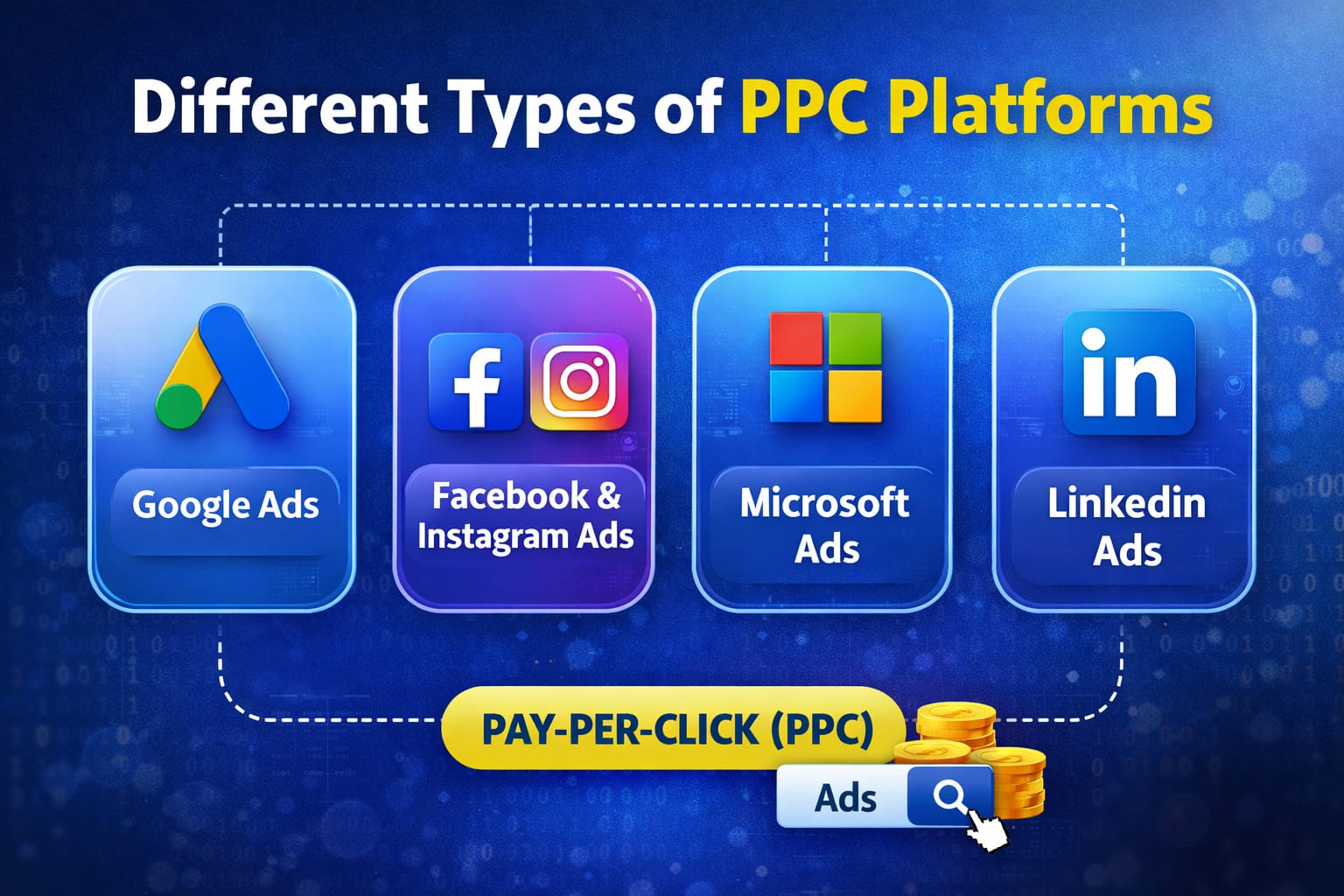
In this guide, we’ll explore the top PPC platforms: Google Ads, Facebook Ads, Instagram Ads, LinkedIn Ads, and Microsoft Ads — including their purpose, types of ads, and best use cases.
Let’s break it down in a simple and practical way.
In this blog, we’ll explore the top PPC platforms including Google Ads, Facebook Ads, Instagram Ads, LinkedIn Ads, and Microsoft Ads. We’ll cover their purpose, types of ads, and when to use each platform.
Let’s dive in.
Google Ads
Google Ads is the largest and most powerful PPC advertising platform. It allows businesses to appear on Google search results, YouTube, Gmail, and millions of partner websites.
Purpose of Google Ads
The main purpose of Google Ads is to target high-intent users — people actively searching for products or services. This makes it one of the best platforms for direct conversions.
Types of Google Ads
- Search Ads – Text-based ads that appear on Google search results when users type specific keywords. Ideal for capturing ready-to-buy customers.
- Display Ads – Visual banner ads shown on websites within Google’s Display Network. Great for brand awareness and retargeting.
- Shopping Ads – Product-based ads showing image, price, and store name directly in search results. Perfect for eCommerce businesses.
- Video Ads – Ads that run on YouTube before, during, or after videos. Used for brand storytelling and engagement.
- Performance Max Campaigns – AI-driven campaigns that run across all Google channels automatically to maximize conversions.
- App Campaigns – Designed to promote mobile app installs and in-app actions.
When to Use Google Ads
Best for lead generation, local services, high-intent buyers, and online sales.
Facebook Ads
Facebook Ads allow businesses to target users based on interests, behaviors, demographics, and online activity.
Purpose of Facebook Ads
The main purpose is audience targeting and brand visibility. It works well for both cold and warm audiences.
Types of Facebook Ads
- Image Ads – Simple ads with a single image and text. Easy to create and great for quick promotions.
- Video Ads – Engaging video content that explains products or services visually.
- Carousel Ads – Multiple images or videos in one ad that users can swipe through. Ideal for showcasing multiple products.
- Collection Ads – Mobile-friendly ads displaying a product catalog for seamless shopping experience.
- Lead Generation Ads – Ads with built-in forms to capture user information without leaving Facebook.
- Messenger Ads – Ads that start conversations directly in Facebook Messenger.
- Retargeting Ads – Ads shown to users who previously visited your website or interacted with your brand.
When to Use Facebook Ads
Best for brand awareness, retargeting campaigns, and cost-effective lead generation.
Instagram Ads
Instagram Ads are managed through Meta Ads Manager and focus heavily on visual content.
Purpose of Instagram Ads
The purpose is visual engagement and brand storytelling. It works exceptionally well for visually appealing industries.
Types of Instagram Ads
- Photo Ads – Single image ads placed in user feeds.
- Video Ads – Short video ads that grab attention quickly.
- Story Ads – Full-screen vertical ads appearing between Instagram Stories.
- Reels Ads – Ads placed within Instagram Reels for high engagement.
- Carousel Ads – Swipeable posts with multiple images or videos.
- Explore Ads – Ads shown in the Explore section where users discover new content.
- Shopping Ads – Product-tagged ads allowing users to purchase directly.
When to Use Instagram Ads
Best for fashion, beauty, fitness, travel, food, and lifestyle brands targeting younger audiences.
LinkedIn Ads
LinkedIn Ads is a premium PPC platform mainly focused on B2B marketing.
Purpose of LinkedIn Ads
The main purpose is targeting professionals and decision-makers based on job title, industry, company size, and seniority.
Types of LinkedIn Ads
- Sponsored Content – Native ads appearing in users’ feeds. Great for promoting blogs, webinars, and services.
- Text Ads – Small text-based ads displayed on the sidebar. Budget-friendly option.
- Message Ads (InMail Ads) – Personalized messages sent directly to users’ LinkedIn inbox.
- Dynamic Ads – Personalized ads that automatically include user profile details.
- Lead Gen Forms – Pre-filled forms that make it easy to capture business leads.
- Video Ads – Engaging video content targeting professionals.
- Document Ads – Allows users to download whitepapers, case studies, or brochures directly.
When to Use LinkedIn Ads
Best for B2B marketing, SaaS companies, consultants, recruitment firms, and corporate services.
Microsoft (Bing) Ads
Microsoft Ads allows businesses to advertise on Bing, Yahoo, MSN, and partner networks.
Purpose of Microsoft Ads
The purpose is to reach a less competitive audience with potentially lower CPC while maintaining high-quality traffic.
Types of Microsoft Ads
- Search Ads – Text ads that appear on Bing search results.
- Shopping Ads – Product listing ads similar to Google Shopping.
- Dynamic Search Ads – Automatically generated ads based on your website content.
- Audience Ads – Native ads shown across Microsoft’s partner websites.
- Multimedia Ads – Visually rich ads designed to stand out in search results.
When to Use Microsoft Ads
Best for expanding reach beyond Google and reducing cost-per-click while maintaining strong conversions.
How to Choose Right Platforms
Choosing the right PPC platform depends on your business goals:
- Need high-intent traffic? → Google Ads
- Want strong audience targeting? → Facebook & Instagram Ads
- Targeting business professionals? → LinkedIn Ads
- Looking for lower CPC and expansion? → Microsoft Ads
Often, a multi-platform PPC strategy delivers the best results.
Conclusion
PPC advertising platforms offer businesses powerful opportunities to grow quickly and strategically. Each platform — Google Ads, Facebook Ads, Instagram Ads, LinkedIn Ads, and Microsoft Ads — serves a different purpose and audience.
The key to successful PPC campaigns lies in understanding your target market, selecting the right platform, choosing the correct ad format, and continuously optimizing for better performance


