If you have recently started a blog, publishing content alone is not enough to get traffic from Google. Every blog post needs proper on-page SEO to help search engines understand your content and rank it for relevant searches.
Whether you’re writing about digital marketing, technology, health, finance, or travel, following a structured on-page SEO checklist can significantly improve your visibility in search results.
In this guide, we’ll cover the most important on-page SEO elements that every new blogger should optimize before hitting the publish button.
What is On-Page SEO?
On-page SEO refers to the optimization of individual web pages to improve their rankings in search engines and attract relevant traffic. It includes optimizing content, titles, headings, images, URLs, internal links, and user experience factors.
According to SEO experts, properly optimized pages have a higher chance of ranking for competitive keywords such as:
On-page SEO checklist
SEO for beginners
Blog SEO tips
Google ranking factors
SEO optimization guide
How to rank on Google
SEO best practices
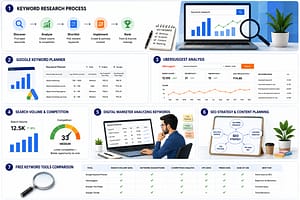
1. Conduct Keyword Research Before Writing
Keyword research is the foundation of every successful blog post.
Use tools like:
Google Keyword Planner
Ahrefs
SEMrush
Ubersuggest
Google Search Console
Find a primary keyword and a few related keywords with good search volume and moderate competition.
Example:
Primary Keyword:
On-Page SEO Checklist
Secondary Keywords:
SEO checklist for blogs
SEO optimization tips
Blog SEO guide
Google ranking factors
Use these naturally throughout your content.
2. Write an SEO-Friendly Title Tag
Your title is one of the strongest ranking signals.
Best Practices:
Include your primary keyword.
Keep it under 60 characters.
Make it compelling for users.
Good Example:
On-Page SEO Checklist for New Blogs: 15 Steps to Rank Higher
3. Create a Short and Clean URL
Search engines and users prefer simple URLs.
Good URL:
yourwebsite.com/on-page-seo-checklist
Bad URL:
yourwebsite.com/blog-post-12345-seo-guide-for-beginners
Include your primary keyword in the URL whenever possible.
4. Optimize Your Meta Description
A well-written meta description improves click-through rates.
Example:
Learn the complete on-page SEO checklist for new blogs. Improve rankings, increase organic traffic, and optimize every post for Google.
Keep it between 150-160 characters.
5. Use One H1 Heading
Your blog should have only one H1 tag, which is usually the title.
Example:
On-Page SEO Checklist for New Blogs
This helps Google understand the main topic of the page.
6. Structure Content with H2 and H3 Headings
Headings improve readability and SEO.
Example:
H2
Keyword Research
Title Tag Optimization
Internal Linking
H3
Best Keyword Research Tools
How to Write Better Titles
This structure helps search engines understand content hierarchy.
7. Optimize Content for Search Intent
Google ranks content that solves users’ problems.
Ask yourself:
What information is the user looking for?
Does my content answer their question completely?
Is the content better than competing pages?
Focus on providing real value rather than stuffing keywords.
8. Use Keywords Naturally
Include your primary keyword in:
Title
URL
First 100 words
H2 heading
Meta description
Image alt text
Avoid keyword stuffing.
Google now prioritizes content quality and relevance.
9. Add Internal Links
Internal links help search engines discover more pages on your website.
Example:
If you’re discussing on-page SEO, link to related articles such as:
What Is Technical SEO?
SEO vs PPC
Beginner’s Guide to Keyword Research
This improves user engagement and page authority.
10. Add External Links to Trusted Sources
Linking to authoritative websites increases credibility.
Examples:
Google Search Central
HubSpot
Moz
Ahrefs
Only link to relevant and trustworthy sources.
11. Optimize Images
Images improve user experience but should also be optimized.
Checklist:
✔ Compress images
✔ Use descriptive file names
✔ Add ALT text
✔ Use modern formats like WebP
Example Alt Text:
“On-page SEO checklist for new blogs”
12. Improve Page Speed
Page speed is a confirmed Google ranking factor.
Ways to improve speed:
Use caching plugins
Optimize images
Minify CSS and JavaScript
Choose reliable hosting
Use a CDN
A fast website improves rankings and user experience.
13. Make Your Blog Mobile-Friendly
More than half of web traffic comes from mobile devices.
Ensure:
Responsive design
Readable fonts
Fast loading speed
Easy navigation
Google uses mobile-first indexing, making this step essential.
14. Add Schema Markup
Schema helps search engines better understand your content.
Useful schema types include:
Article Schema
FAQ Schema
Breadcrumb Schema
Schema can improve visibility in search results and increase click-through rates.
15. Include a Strong Call-to-Action (CTA)
Every blog should encourage users to take action.
Examples:
Subscribe to the newsletter
Download a free guide
Contact your team
Read related articles
A good CTA increases engagement and conversions.
Final Thoughts
Following a proper on-page SEO checklist can help new blogs gain visibility, improve search rankings, and attract more organic traffic. Focus on creating valuable content, optimizing every page element, and providing the best possible user experience.
Remember, SEO is not a one-time task. Regularly update your content, monitor performance through Google Search Console, and adapt to Google’s latest algorithm changes.
By implementing these on-page SEO best practices, your blog will have a stronger foundation for ranking on Google and competing for high-search-volume keywords.